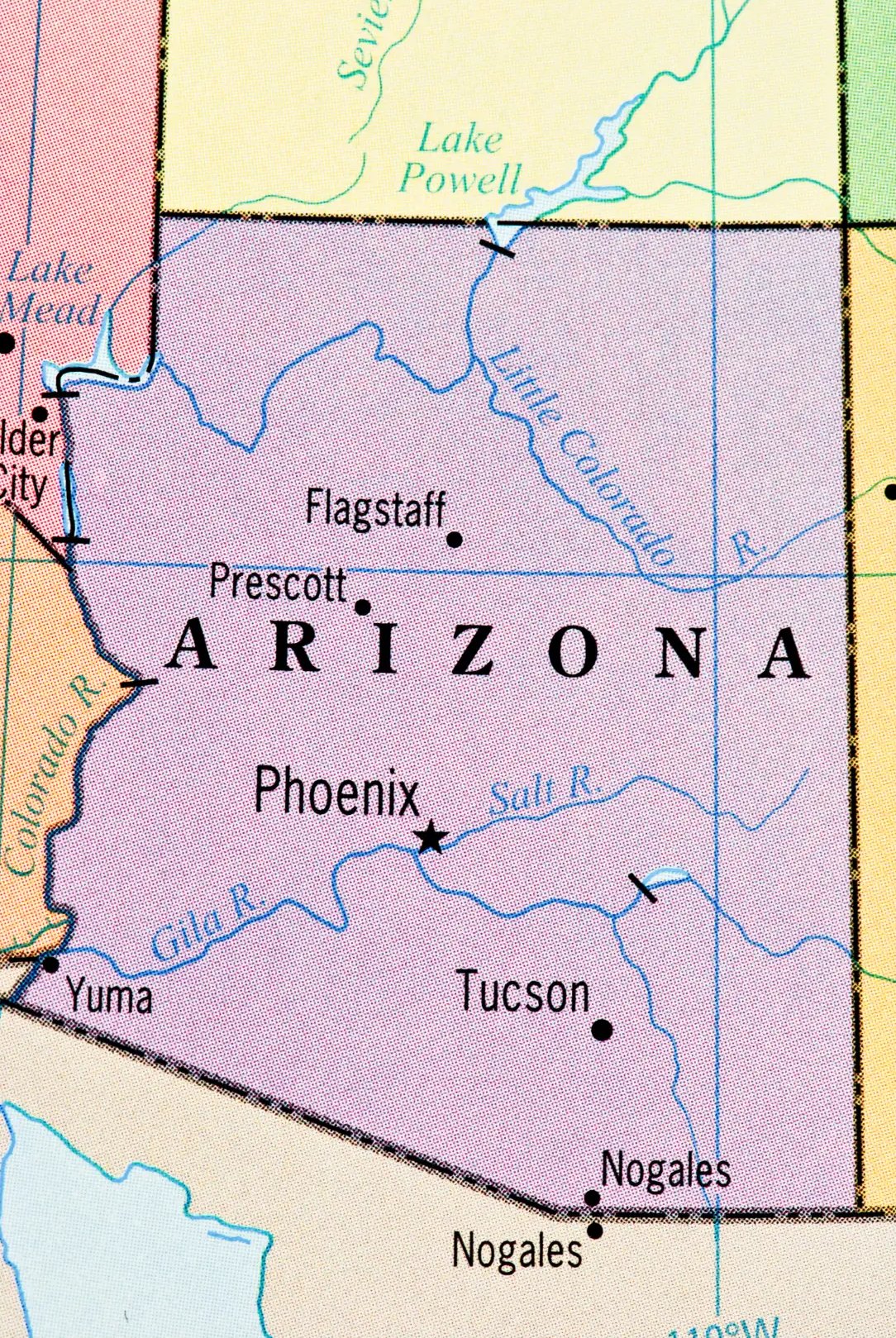
route guide · St George Regional Airport (SGU) → Phoenix Sky Harbor International Airport (PHX)
St George (SGU) to Phoenix (PHX) flights
Route stats, the plane you’ll get, weather, where to eat, pro sports, oddball hotels, and five things worth the trip.

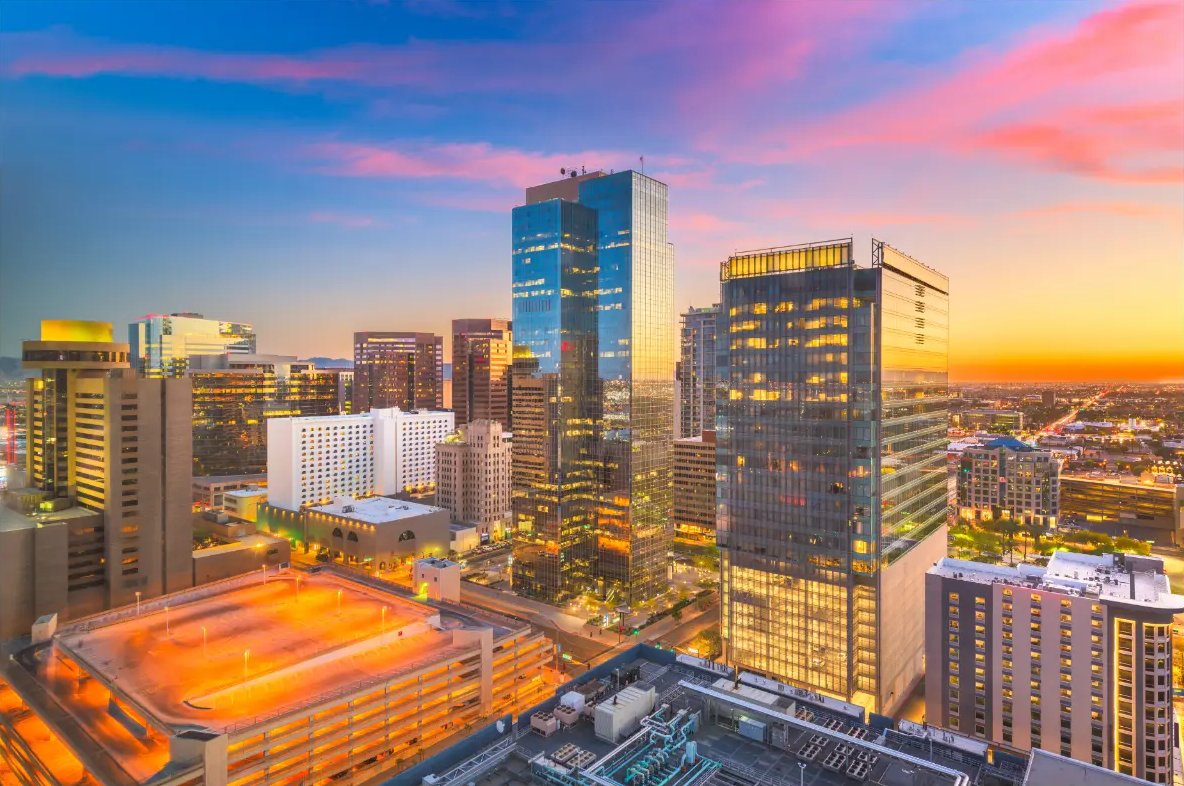
Phoenix is close enough to feel like St George’s big backyard—just with more cactus, more concerts, and a much bigger airport. In about 90 minutes, you can trade red cliffs of St George for a pro ballgame in Phoenix, or a resort pool, or a dinner worth texting home about. Here’s how the flight works, what it costs, and what’s actually worth doing once you get there.
watch St George (SGU) → Phoenix (PHX) · today’s SGU flight board
flight stats
SGU → PHX- frequency
- 2–3
- usually nonstops per day
- scheduled time
- 1 hr 26–30 min
- about · gate to gate
- arrived on time
- 82.5%
- historically
- cancelled
- 0.1%
- historically
- typical round trip
- ...
- loading
| route | St George Regional (SGU) → Phoenix Sky Harbor (PHX) |
|---|---|
| nonstop airline | American Airlines, operated by SkyWest |
| flying out of SGU since | November 4, 2016 · 10 years |
| distance | 263 miles |
| frequency | usually 2–3 nonstops per day |
| scheduled time | about 1 hr 26–30 min, gate to gate |
| arrived on time | 82.5% historically |
| cancelled | 0.1% historically |
| typical round trip | loading... |
| current posted deal | loading... |
Schedule and distance: FlightsFrom and current airline schedules. Route start: SkyWest’s August 2016 announcement, with the first flight on November 4, 2016. Reliability: DelayAtlas, covering 889 scheduled flights from September 2025 through August 2026. “On time” means arriving less than 15 minutes late; it is history, not a promise for your flight.
a little history
Long before anyone built a resort here, the Hohokam farmed this valley. Between roughly 450 and 1450 AD they dug hundreds of miles of canals off the Salt River, some of the largest irrigation systems in pre-contact North America. Then they faded out, and nobody is completely sure why.
In 1867, Jack Swilling noticed the old canal lines and cleared them out for new farms. Someone (the usual credit goes to Darrell Duppa) suggested the name Phoenix: a city rising from the ashes of an older one. It was incorporated in 1881 and became the capital in 1889, while Arizona was still a territory. Statehood came in 1912.
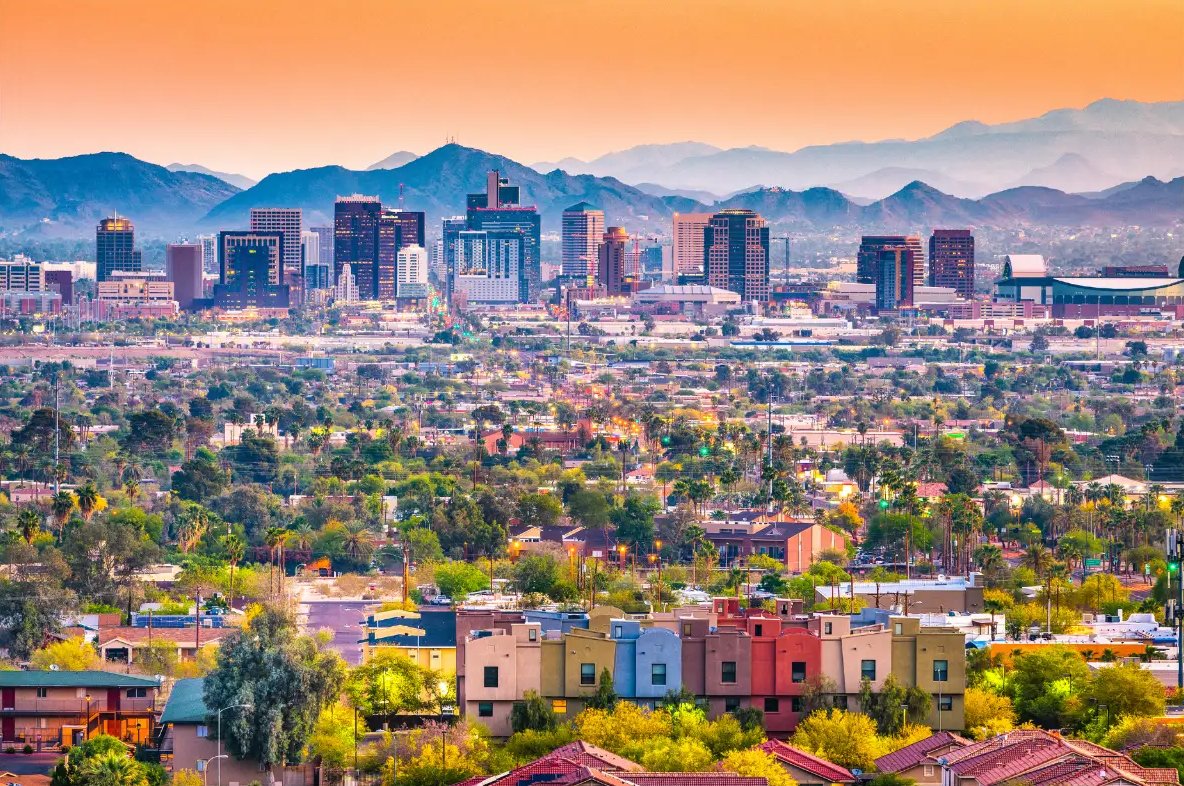
The real growth arrived with dams, air bases, and air conditioning. Phoenix had about 107,000 people in 1950. Today it’s the fifth-largest city in the country at roughly 1.6 million, with close to 5 million in the metro. Sky Harbor opened in 1935 and now handles more than 50 million passengers a year—which is a lot of people for a place that used to be mostly canals and cotton.
the plane you’ll be on
This is not a big jet route. Almost every flight out of St George for Phoenix is a regional jet with two seats on each side of the aisle — so you’ll have either a window or an aisle, never a middle, and the cabin fills up fast. Here’s what’s actually flying the route.
| aircraft | flights/week | seats | rollaboard in the bin? |
|---|---|---|---|
| Bombardier CRJ-700 | 16 | 65 (9 first, 56 main) | no — gate-checked |
| Embraer E175 | 4 | 76 (12 first, 20 extra-legroom, 44 main) | yes |
| Bombardier CRJ-900 | 1 | bigger CRJ-700 cousin | no — gate-checked |
What the seats are like: on the CRJ-700, main cabin is 56 seats with about 31 inches of pitch and roughly 17-inch-wide seats — fine for 90 minutes, not a nap machine. First is 9 seats with about 37 inches of pitch and 20-inch width. The E175 is the roomier of the two: 12 first, 20 extra-legroom main seats, and 44 standard. Neither has seatback screens; entertainment streams to your own phone or tablet over paid Wi-Fi.
Aircraft mix: Flightera’s SGU–PHX route page, which logged 21 flights a week across those three types in May 2025 — the mix shifts, so check the equipment on your own flight. Bag rules: American’s carry-on page (22 x 14 x 9 inches, and its own note that “some airports and planes may have additional carry-on restrictions”) and an airline policy memo write-up confirming the CRJ-200/700/900 and E140/145 use jet-bridge valet tags while E175 bins take rollaboards.
traveler tips for flying to Phoenix: what catches people
Time zones: timeanddate.com. Airport layout and Sky Train: Phoenix Sky Harbor. Terminals and travel times change — verify before you fly.
nonstops from Phoenix to the world
Phoenix is an American Airlines hub, so the SGU flight is really a door to the rest of the map. A sampling of nonstops out of Sky Harbor:
| region | nonstop from PHX to | avg round trip from SGU (via PHX) |
|---|---|---|
| Europe | London Heathrow (LHR) · Frankfurt (FRA, seasonal) | about $1,000–1,500 |
| Mexico | Cancun (CUN) · Mexico City (MEX) · Puerto Vallarta (PVR) · Los Cabos (SJD) · Guadalajara (GDL) · Mazatlán (MZT) | about $450–700 |
| Canada | Vancouver (YVR) · Calgary (YYC) · Toronto (YYZ) | about $450–700 |
| Caribbean & Central America | Montego Bay (MBJ, seasonal) · Liberia, Costa Rica (LIR, seasonal) | about $550–850 |
| Hawaii & Alaska | Honolulu (HNL) · Maui (OGG) · Kona (KOA) · Anchorage (ANC, seasonal) | about $500–800 |
| East Coast | New York (JFK) · Boston (BOS) · Washington (DCA) · Philadelphia (PHL) · Charlotte (CLT) · Miami (MIA) · Orlando (MCO) | about $350–550 |
| Middle of the country | Chicago (ORD) · Dallas (DFW) · Houston (IAH) · Atlanta (ATL) · Minneapolis (MSP) | about $300–450 |
Route list: FlightsFrom’s PHX page and airline schedules, checked November 2026. Average round trips are rough main-cabin economy ranges for one ticket from St George connecting in Phoenix — holidays run higher. Seasonal routes come and go — confirm on the airline’s site.
top 5 things to see
1. Desert Botanical Garden
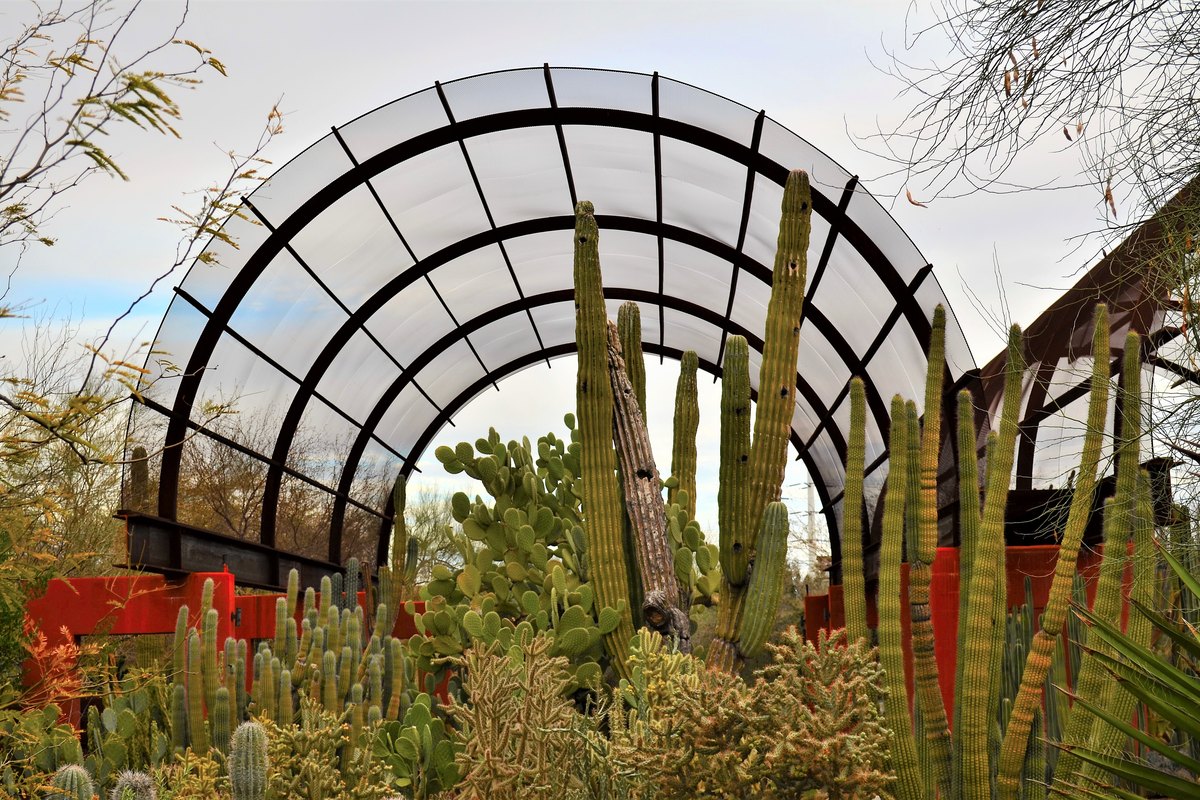
Start here for an easy introduction to the Sonoran Desert. The garden sits in Papago Park, with desert plants, walking trails, art installations, and seasonal events. Go early in warm months and check admission before visiting. official site
2. Heard Museum
A thoughtful half-day stop for American Indian art and culture, from historical work to contemporary artists. It’s beautiful, interesting, and air-conditioned—on some Phoenix afternoons, that last part deserves its own little award. official site
3. Camelback Mountain
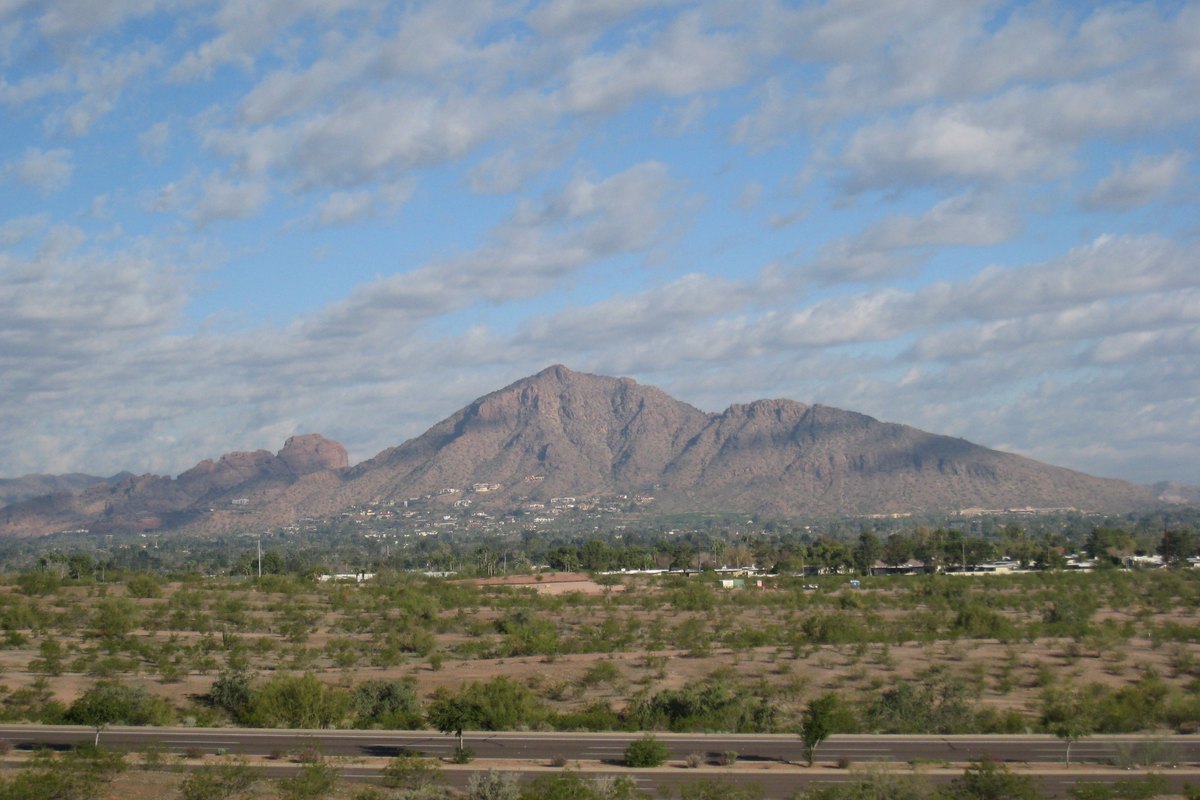
Camelback looks friendly enough from town. The first steep stretch clears that up. Echo Canyon and Cholla are difficult trails with roughly 1,200 feet of elevation gain, but the view earns the effort. Start early, carry water, and skip the summit in dangerous heat. For an easier red-rock stop, choose Papago Park’s Hole-in-the-Rock instead. visitor guide
4. Musical Instrument Museum
Instruments from around the world, listening stations, and hands-on exhibits make this an easy pick. Even people who “don’t do museums” tend to run out of excuses here. It’s also a genuinely good indoor option on a hot or rainy day. Phoenix museum guide
5. Sedona — the worthwhile add-on
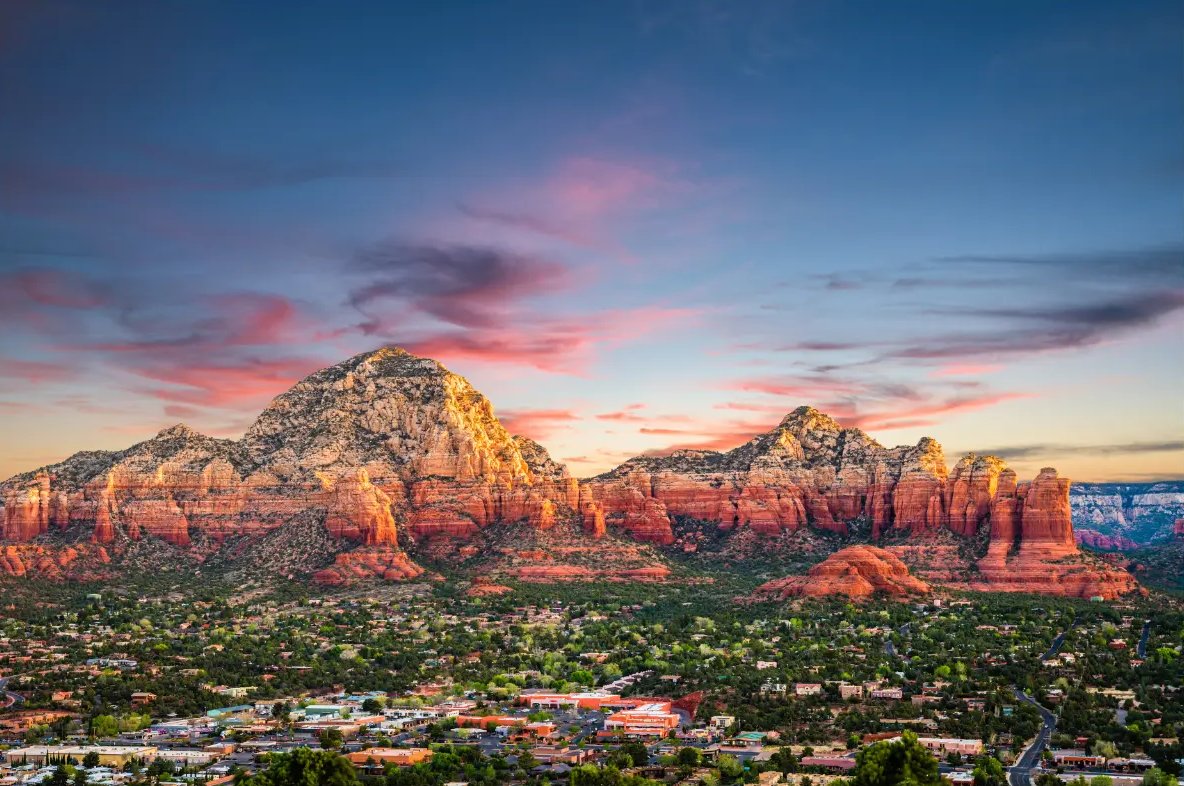
Yes, we know Sedona isn’t Phoenix. We’re making an executive decision because it belongs on this list. Plan roughly 113 miles and two hours by car in normal traffic, mostly via I-17 north and SR-179. Stay overnight if you can; a day trip works with an early start and a little determination. Check road conditions before driving. official directions
pro sports: what a ticket averages
If your ideal itinerary has a scoreboard, Phoenix makes it easy. Downtown has basketball and baseball; the Cardinals play in nearby Glendale, and Phoenix Rising adds pro soccer. Just don’t look at the ticket average while you’re already holding a ballpark beer.
| team | sport | league & home | listed average |
|---|---|---|---|
| Arizona Cardinals | football | NFL · State Farm Stadium, Glendale | $258.94 |
| Phoenix Suns | basketball | NBA · Mortgage Matchup Center | $193.50 |
| Phoenix Mercury | basketball (women's) | WNBA · Mortgage Matchup Center | $115 |
| Arizona Diamondbacks | baseball | MLB · Chase Field | $124.91 |
| Phoenix Rising FC | soccer | USL Championship · Phoenix — "FC" just means football club, i.e. soccer | $38 |
These are team-wide listing averages shown by TicketSmarter when checked November 14, 2026—not face-value guarantees or a promise for a particular home game.
what people actually go for
Cactus League spring training
Fifteen MLB teams train at ten Greater Phoenix ballparks in February and March. The baseball is close, the stadiums are small, and nobody minds if your main strategy is finding the shade. In 2026, the average cheapest available ticket was $33.83, with big differences by team and matchup. trip guide · price study
Golf, pools, and resorts
Greater Phoenix has roughly 200 golf courses, destination resorts, spas, and pools. The WM Phoenix Open is the loud headline event, but it’s perfectly acceptable to fly 90 minutes and spend most of the trip horizontal by a pool. I won’t tell. visitor guide
Desert outdoors
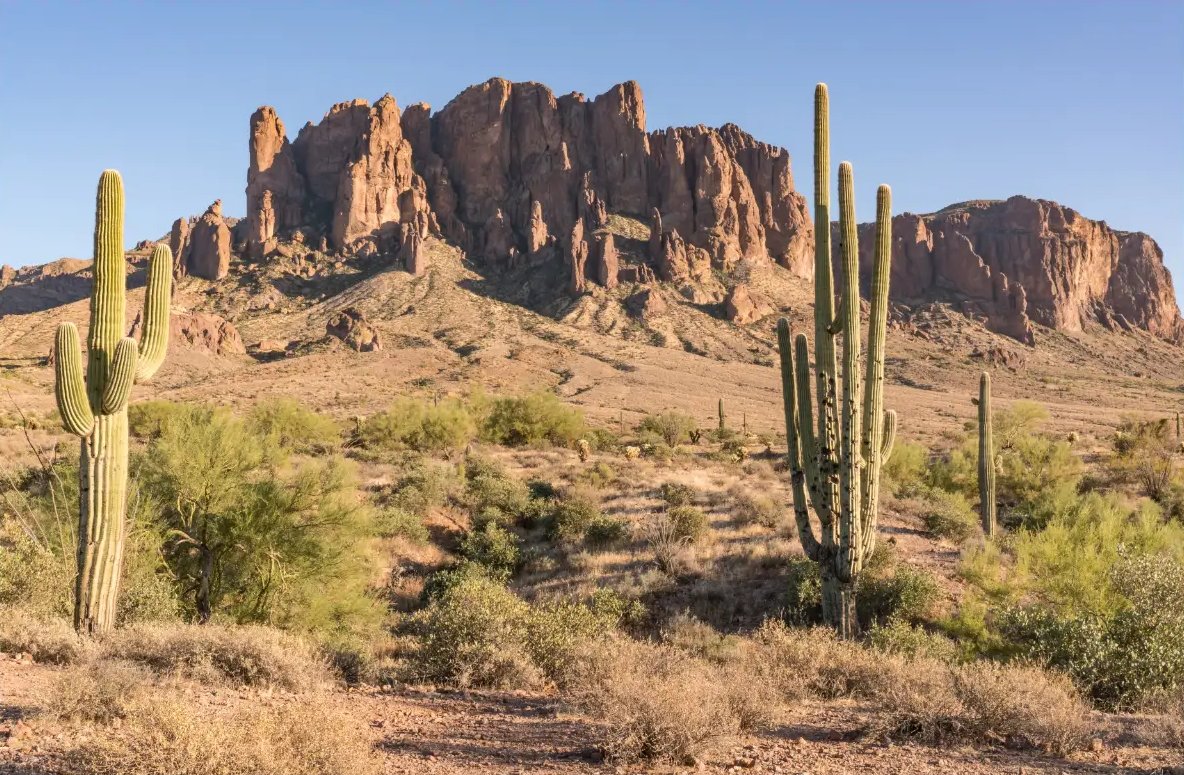
Hiking and biking are the obvious draws, but visitors also kayak, paddleboard, ride horses, and explore the Salt River and nearby lakes. Spring brings wildflowers; summer demands early starts and serious heat caution. outdoor guide
Food, music, and events
Spring brings the Innings Festival and M3F Fest, while First Friday art walks, food festivals, concerts, and restaurant patios fill the calendar. Check events before choosing a weekend—a great concert can turn a cheap flight into a very confident hotel bill. annual events
weather: when to go
Phoenix is a desert, so the honest answer is “depends how you feel about 100 degrees.” Here’s the average year at Sky Harbor, the airport you’re landing at—normal highs, lows, and rainfall from the 1991–2020 climate record.
| month | avg high | avg low | rain | verdict |
|---|---|---|---|---|
| January | 68°F | 46°F | 0.9 in | great, cool nights |
| February | 71°F | 49°F | 0.9 in | great, cool nights |
| March | 78°F | 55°F | 0.8 in | excellent |
| April | 86°F | 61°F | 0.2 in | excellent |
| May | 95°F | 70°F | 0.1 in | getting hot |
| June | 104°F | 79°F | 0.02 in | hot and bone dry |
| July | 107°F | 85°F | 0.9 in | brutal, monsoon storms |
| August | 105°F | 84°F | 0.9 in | brutal, monsoon storms |
| September | 100°F | 78°F | 0.6 in | still hot |
| October | 89°F | 66°F | 0.6 in | excellent |
| November | 77°F | 54°F | 0.6 in | excellent |
| December | 66°F | 45°F | 0.7 in | great, cool nights |
Best time for weather: November through April. March, April, October and November are the sweet spot—highs in the upper 70s to mid 80s, dry, and cool enough to hike before breakfast. December through February is mild but genuinely chilly after dark (45–49°F), and it’s when most of the year’s rain shows up. May through September is heat territory.
Monthly averages: Climate of Phoenix, built on NOAA 1991–2020 normals for Phoenix Sky Harbor International Airport, cross-checked against the official NCEI normals table.
where to eat that isn’t a chain
Phoenix has plenty of corporate dining rooms. These five are the opposite: a pizza pioneer, a Native American landmark, a strip-mall chile joint with no website, a 40-year family kitchen, and a speakeasy with no sign. Average per-person prices are what the menus ran when checked November 14, 2026.
| restaurant | area | avg per person | the catch |
|---|---|---|---|
| Pizzeria Bianco | Heritage Square, downtown | about $20–30 | no reservations, no take-out |
| Fry Bread House | N 7th Ave | about $10–20 | closed Sunday; bread made to order |
| Los Dos Molinos | South Phoenix | about $18–26 | no website, no reservations |
| Comedor Guadalajara | South Central Ave | about $10–20 | closed Monday and Tuesday |
| Dick’s Hideaway | N 16th St | about $15–25 | no sign; 8 bar stools |
Pizzeria Bianco
Chris Bianco started this in the back corner of a Phoenix grocery store in 1988 and ended up winning the James Beard Award for Best Chef: Southwest in 2003, then Outstanding Restaurateur in 2022. The menu has barely moved since: six staple pies, including the Rosa with red onion, pistachios and rosemary. Why try it: it’s the restaurant that made Phoenix care about food, and it still runs on no-reservation walk-ins. Go at 11 when it opens or you’ll wait.
Fry Bread House
Opened in 1992 by Cecilia Miller, a member of the Tohono O’odham Nation, and still family-run — a James Beard “America’s Classics” winner, one of only a few Native American restaurants to get that. Counter service, picnic tables outside, fry bread made when you order it. Why try it: a red chile beef fry bread taco will feed two people, and the sweet bread with honey and powdered sugar is the best $5 in the valley.
Los Dos Molinos
A strip-mall room off 16th Street and Thomas Road with no website, no reservations, and a laminated menu. The kitchen grinds its own chile and the red and green come to the table in bottles so you decide. Why try it: it’s the most honest Sonoran chile food in the city and it costs less than a parking garage. Expect a line, expect to point at the menu.
Comedor Guadalajara
Family-owned on South Central Avenue for more than 40 years, roasting whole green chiles in-house for the rellenos instead of opening a can. Big, casual dining room built for groups. Why try it: the chile relleno plus a chicken enchilada combo is the plate people drive across town for, and plates run $10–20. Closed Monday and Tuesday, so plan around it.
Dick’s Hideaway
Two dark doors with no signage and a hand-written “sorry we are open” sign, eight seats at the bar, and the kitchen right behind it. New Mexican cooking — carne adovada, green chili enchiladas, the roasted garlic platter — with a cheeseburger at $13 if you need the off-ramp. Why try it: it’s the closest thing Phoenix has to a secret, and breakfast starts at 7am, which solves the early-flight problem.
Pizzeria Bianco: the restaurant’s own page for the 1988 start, awards, and the no-reservation, no-take-out policy; the $20–30 range is the Google-reported per-person figure. Fry Bread House: frybreadhouseaz.com and a 2025 profile for the 1992 opening, the James Beard America’s Classics award, hours and the $10–30 range. Los Dos Molinos and its $18–26 entrées: Glass & Note. Comedor Guadalajara: a November 2026 Arizona chile-relleno roundup for the 40-plus years, $10–20 plates and the closed days. Dick’s Hideaway: the owner’s page for address and hours, plus the dinner menu for entrée prices. Menus and hours move — check before you go.
hotels that are out of the way
Phoenix has plenty of resorts you’ve already heard of. These five feel like discoveries: a 1930s artist’s estate, a 1929 winter retreat, a 1918 West Valley hideaway, a converted office building, and a 1956 time machine. Average nightly rates are what each property was running when checked November 14, 2026.
| hotel | area | avg night |
|---|---|---|
| The Hermosa Inn | Paradise Valley | about $504 |
| Royal Palms Resort and Spa | Camelback Road, Phoenix | about $682 |
| The Wigwam | Litchfield Park (West Valley) | about $287 |
| FOUND:RE Phoenix | Roosevelt Row, downtown | $231–$418 |
| Hotel Valley Ho | Old Town Scottsdale | about $286 |
The Hermosa Inn
Built in the 1930s by cowboy artist Lon Megargee as a private hideaway for friends, then opened to guests. Adobe casitas sit out in desert gardens, there’s a small outdoor pool, and Lon’s restaurant keeps a wine cellar of more than 500 bottles. Why try it: it’s the quietest address in the valley while still being under 20 minutes from the airport. Bring a book; the gardens handle the rest.
Royal Palms Resort and Spa
Built in 1929 as a private wellness estate for Delos Cooke, a Cunard Steamship executive whose wife needed warmer air. The original mansion is still the center of the property, now ringed by casitas and villas. Why try it: the grounds feel like a European adventure that got lost in the desert. Go in July (around $419 a night) instead of February (around $998) if you can stand the heat.
The Wigwam
Started in 1918 by the Goodyear Tire & Rubber Company out in the West Valley, far from the resort corridor. Adobe casitas, three pools with a 25-foot water-slide tower, three golf courses, and golf-cart shuttles that ferry you around the property. Why try it: it’s the anti-resort resort—nobody is in a hurry, and it asks roughly half of what Paradise Valley does.
FOUND:RE Phoenix
A 1970s office building on Roosevelt Row turned art hotel, with work by Phoenix artists on the walls and exhibitions that rotate. Rooms read like industrial lofts: polished concrete, reclaimed wood, oversized factory windows. Why try it: you can stay three nights without touching a car—light rail is next door and the galleries are outside. The art changes, so a repeat visit isn’t the same visit.
Hotel Valley Ho
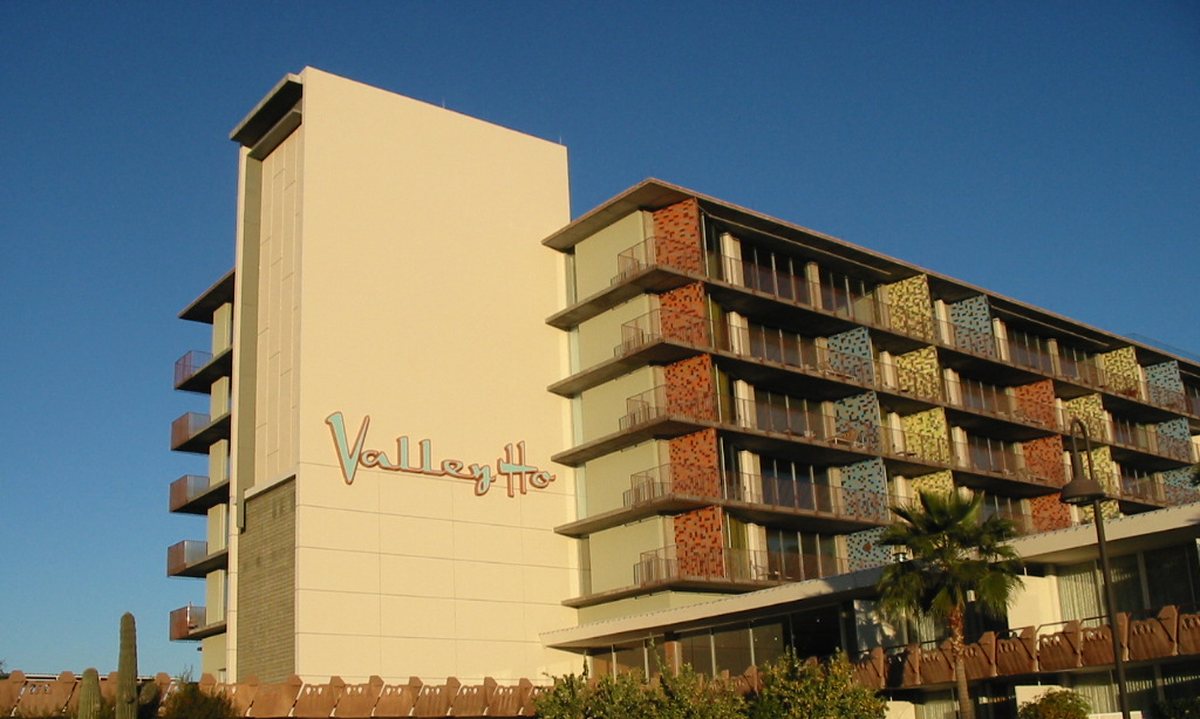
A 1956 mid-century original in Old Town Scottsdale: lava-rock walls, a Jetsons-ish lobby, two pools (the lively OH and the quieter OHasis), and no resort fee or pet fee. Why try it: it’s the closest thing Phoenix has to a time machine, and Old Town’s restaurants and galleries are a short walk from the door.
Rates are average nightly prices shown by hotel price trackers when checked November 14, 2026: The Hermosa Inn and Hotel Valley Ho are 365-night medians from LuxuryIntel; Royal Palms is a typical nightly Chase Travel rate, with a July median near $419 and a February median near $998; The Wigwam is a HotelsCombined average, and the resort itself lists low season from $209 and high season around $390; FOUND:RE is the published standard-room and suite range. Room type, dates, and holidays move these numbers hard—check the hotel before planning a trip around one.
spas worth flying for
This is a real reason people get on a plane: the Phoenix area is one of the country’s spa capitals, with more than 25 upscale resort spas and day spas in Scottsdale alone. Winter weather is the other half of the pitch—outdoor treatment rooms run all day from January through April. Prices below are per night, checked November 14, 2026, and they swing hard by season.
| where | area | avg night | the spa |
|---|---|---|---|
| Castle Hot Springs | Morristown, ~50 mi NW | about $1,000–1,500, all-inclusive | three natural hot spring pools, open 24 hours |
| The Boulders Resort & Spa | Carefree | about $188–230 in summer, up to about $1,000 in season | 33,000 sq ft spa, 24 treatment rooms |
| Omni Montelucia | Paradise Valley | about $220–1,010 | Moroccan hammam ritual, rooftop terrace pool |
| Sanctuary Camelback Mountain | Paradise Valley | about $355 | indoor and outdoor treatment rooms onto a Zen garden |
| The Clarendon Hotel and Spa | downtown Phoenix | about $69–101 | day spa plus a courtyard pool with a 50-person HydroSpa |
Castle Hot Springs
Arizona’s first wellness resort, opened in 1896 in a Bradshaw Mountain canyon, closed for 40 years after a 1976 fire, and brought back in 2019. Three spring-fed pools step down from about 104–108°F to a 75–90°F swimming pool, and the water runs 24 hours a day for overnight guests only. Thirty-one standalone bungalows and cabins, a maximum of 60 guests a night, and a two-night minimum. The room rate covers three meals a day from the on-site farm, gratuities, and most guided activities, and there’s no resort fee. It joined the Relais & Châteaux collection in 2026. Why try it: you can be in a natural mineral soak at 2 a.m. with nobody else there. Plan for the last seven miles of dirt road and a high-clearance vehicle if you can.
The Boulders Resort & Spa
A guard gate, then a mile of desert before you reach the lobby, then casitas built around 12-million-year-old granite boulders. The spa is the reason to come: 33,000 square feet, 24 treatment rooms, adult-only, with Watsu in a heated outdoor pool and a meditative labyrinth on the grounds. Spas of America calls it the #1 spa in Arizona and one of the 25 best in the world. Why try it: summer rates fall to around $188–230 a night with fees, which is how you get the best spa in the state for the price of a mid-tier hotel—if you don’t mind 115°F afternoons.
Omni Scottsdale Resort & Spa at Montelucia
A white-washed Pueblo Revival resort in Paradise Valley built around a Moroccan hammam: a traditional ritual of steam, black soap, exfoliation and rinse, plus a rooftop Joya Terrace pool looking at Camelback Mountain. Why try it: it’s the most unusual spa ritual in the valley, and the low end of the rate range sits near $220, which makes it the cheapest way into a real destination spa. Hammam rooms are split by gender, so book a couples massage if you want to share the rest of it.
Sanctuary Camelback Mountain
Twelve indoor and outdoor treatment rooms that open onto a Zen meditation garden, at the foot of Camelback Mountain. Why try it: the outdoor treatment rooms are the point, and they run at their best January through April—hike the mountain in the morning, get rubbed on a heated table in the afternoon.
The Clarendon Hotel and Spa
A 21-and-over boutique hotel on the edge of downtown with a full-service day spa, a courtyard pool with underwater speakers and a 50-person HydroSpa, a rooftop sky deck, and free grab-and-go breakfast. Why try it: at roughly $69–101 a night it’s the cheapest way to fly in, get a massage, and be at a Roosevelt Row gallery in ten minutes. It’s also cannabis-friendly, which is either the draw or the dealbreaker.
Castle Hot Springs: the resort’s own page for what the rate includes and the no-resort-fee policy, a September 2026 guide for the 1896 opening, 31 rooms, 60-guest cap and two-night minimum, and an August 2026 visitor guide plus Spa Hotel Finder for the $1,250-and-up and $1,390 off-season figures. The Boulders: the spa’s own page for the 33,000 sq ft footprint and the Spas of America ranking, and Spa Hotel Finder for the summer all-in rate. Montelucia and Sanctuary: a 2026 Scottsdale spa resort roundup and a luxury-hotel price list. The Clarendon: its own site and a booking listing for the 21+ policy, spa and pool details. Spa-access rules and the January–April rate premium come from a March 2026 season guide. Rates move with the calendar—verify before you book.
bottom line
SGU–PHX is the kind of route that makes a small airport feel a little bigger. Ninety minutes, a different landscape, and a weekend that can be as busy as you want. If Phoenix is a connection instead of the final stop, just leave yourself enough time for the first flight to be human.